First, interpret the fault
A submarine cable fault is not a single universal event. It may arise from damage to the cable, a problem with a repeater or branching unit, a connection issue, or another fault in the system. The first task is to understand what the measurements say. Operators compare system alarms and optical or electrical test results with baselines, review the affected segments and determine whether traffic can be managed across other routes.
In systems with suitable monitoring, a fault can be estimated by measuring electrical characteristics or using optical test methods. The estimated distance is related to the route, not a simple straight line on a map. Survey records and cable-route charts help translate an electrical or optical result into a likely position at sea. The estimate guides the repair plan; it does not mean the vessel can simply sail to one exact coordinate and immediately see a broken cable.
Diagnosis also involves coordination. Operators, cable owners, landing stations and repair contractors share the relevant technical and operational information. Authorities and other maritime users may need notice depending on the area and the nature of work. A repair window is shaped by weather, vessel availability, permits, sea state and the need to limit interruption.
Mobilise a specialist vessel
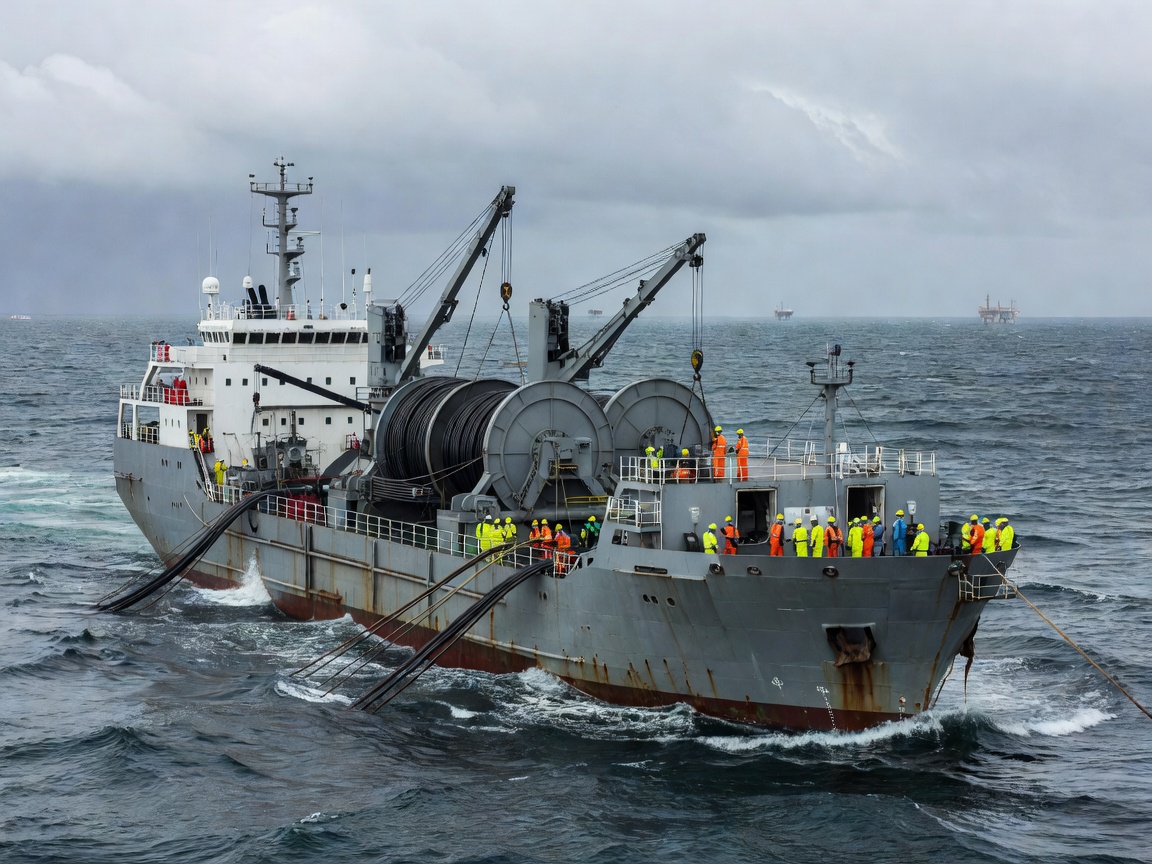
Submarine cable repair depends on ships equipped to handle the particular cable and water depth. Some vessels are dedicated to cable operations; others may be equipped for the task as required. The vessel carries grapnels or other recovery tools, cable engines, storage space for recovered and replacement cable, jointing facilities and instrumentation. Crew members and technicians bring the experience to operate these systems safely.
Before departure, the team reviews the route, fault estimate, cable construction, water depth, seabed conditions, likely repair scope and local operating requirements. Spare cable and jointing materials are selected to match the system. A repair is not a generic patch applied to any line; the replacement must be compatible with the cable, electrical path and optical system.
Once on site, the vessel positions itself over the route and works through a carefully planned sequence. Weather and current can change the practical limits of the operation. The team has to maintain control of the vessel and cable while managing heavy loads suspended in a dynamic marine environment. The work requires patience because recovering cable from the sea is a process, not an instantaneous lift.
Recover, identify and cut
A grapnel may be towed along the route to catch and recover a cable end, or the team may use another recovery approach suited to depth and conditions. The cable is brought aboard using deck machinery. Once recovered, engineers assess its condition and identify the relevant section. The damaged portion is cut away, and the cable ends are prepared for jointing. Depending on the nature of the fault, additional recovery steps may be needed to bring both ends aboard.
Repair crews make a joint that reconnects the optical fibres, conductor and structural elements. Fibre splicing aligns and fuses individual fibres, while other parts of the cable assembly are connected using designed jointing procedures. Skilled technicians work in controlled conditions on deck. The finished joint must protect the fibres and electrical conductor and maintain the cable’s mechanical integrity.
The recovered cable is not always returned to exactly the position it occupied before the fault. The repair plan must account for cable length, vessel position and the need to lay a suitable repair slack or loop. Route records are updated to show the new configuration. If burial was part of the original protection plan, the repaired area may require appropriate burial or protection measures where practical.
Restoring a cable means restoring a continuous engineered path—not merely tying two ends together.
Test before lowering
Before the repaired section is returned to the sea, the team performs tests to verify optical continuity and relevant electrical properties. Testing can identify a poor splice or connection before it becomes inaccessible. The particular measurements depend on system design and the repair scope. Once the repair passes the required checks, the cable is lowered carefully, with attention to tension and route geometry.
At the end of the marine work, operators verify the entire system from the landing stations. They confirm that optical channels and service functions are behaving as expected, assess capacity and coordinate the return of traffic to normal paths. A repaired route can be operational before every administrative record is fully updated, but maintenance documentation and route information remain essential to safe future work.
Why repairs take time
Repair duration depends on much more than the length of the damaged section. The vessel may be far from the site; spare parts and compatible cable must be ready; weather can delay operations; and some faults need additional diagnostic work. Deep water, difficult seabed or a complex branch system can extend the task. The repair team balances urgency with the need to perform a reliable operation.
Traffic may be rerouted during repair if network capacity and available paths permit. This can help customers experience continuity even while the physical line is out of service. It does not remove the need to repair the cable, and rerouting can be constrained by the location and scale of other outages. The physical repair and the network response are complementary layers of resilience.
Organizations such as the International Cable Protection Committee share guidance and promote awareness of cable protection. The ITU’s submarine-system recommendations provide relevant technical context, while the United Nations Convention on the Law of the Sea contains provisions concerning submarine cables. Local permits and operating rules also apply. For a broader view of how alternate routes and traffic planning work together, read Networks Beyond a Single Link.